

New Clinical Study on the PROTEOR QUATTRO Microprocessor-Controlled Knee Prosthesis
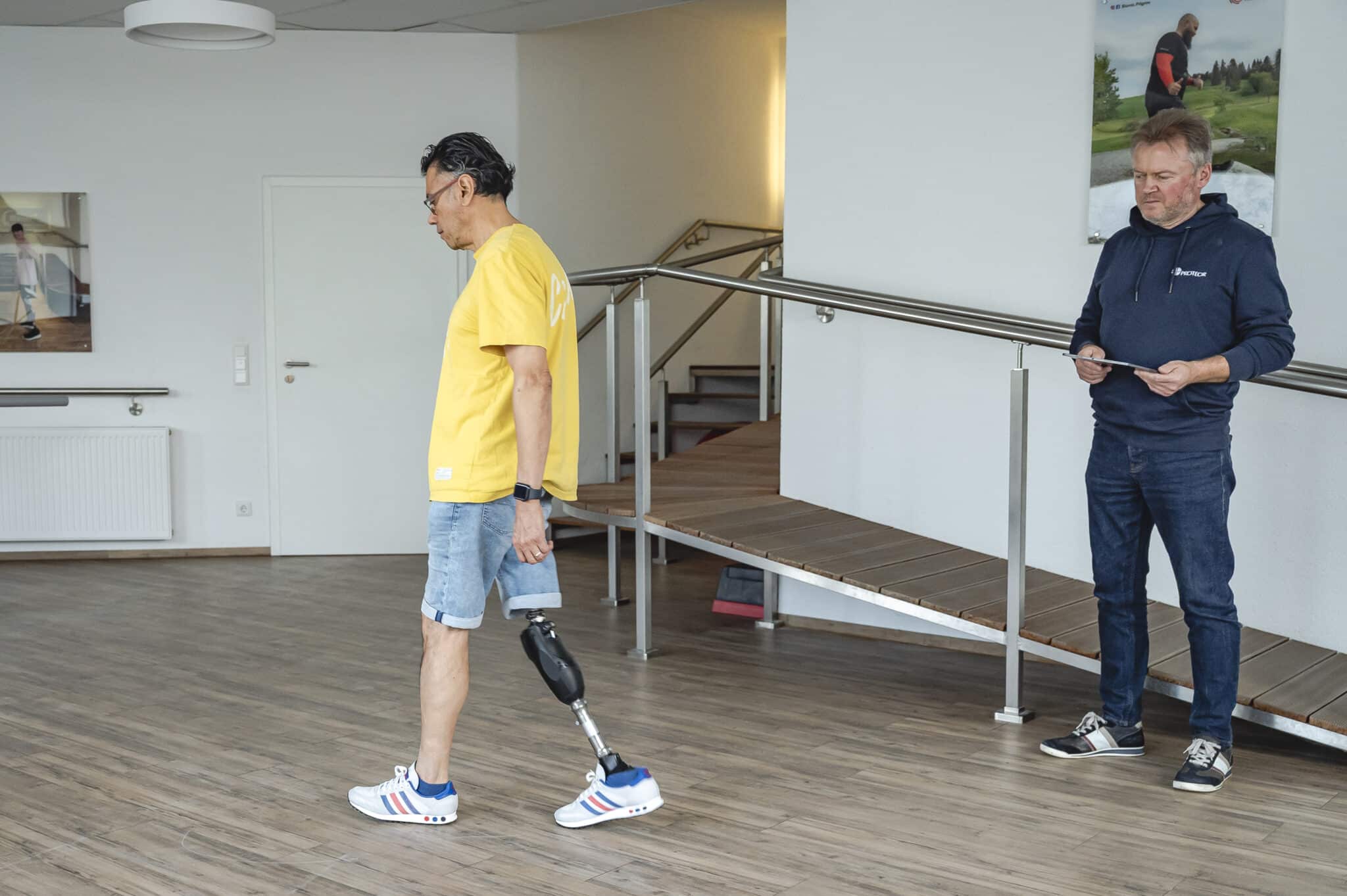
A multicentre clinical study investigated the PROTEOR QUATTRO microprocessor knee. Its objective was to compare users’ performance and experience with QUATTRO with those achieved using their usual microprocessor knee.
A multicentre study conducted in France
The study was carried out in five physical medicine and rehabilitation centers in France and involved 17 active individuals with transfemoral amputations.
The participants usually used different models of microprocessor knees. During the study, they wore both their usual prosthetic device and the PROTEOR QUATTRO knee for a minimum period of four weeks before each assessment session.
This crossover methodology allowed each participant to test both solutions in conditions similar to those encountered in everyday life and then directly compare their experience.
User-defined goals
One of the distinctive features of this study was the importance given to each participant’s individual priorities.
Before the assessments, users were asked to identify activities that were important to them and for which they wanted to evaluate their level of ease. These personalised goals could relate, for example, to walking, moving across different types of terrain, sporting activities, leisure pursuits or certain everyday tasks.
Improved perceived ability to perform everyday activities
The results notably highlighted an improvement in the participants’ perceived ability to carry out the activities they had personally identified as important.
With PROTEOR QUATTRO, users generally gave higher scores for the achievement of their functional goals. These results demonstrate the importance of considering not only performance measured in a clinical environment, but also each individual’s specific needs and the situations they encounter in their daily life.
Comparable locomotor performance
The participants also completed several standardised locomotor tests designed to assess their mobility.
The results obtained with PROTEOR QUATTRO remained comparable to those recorded with the microprocessor knees usually worn by the participants.
PROTEOR continues its commitment to clinical innovation
The results of this study provide new data on the use of PROTEOR QUATTRO by active individuals with transfemoral amputations. In particular, they highlight an improved perceived ability to perform important everyday activities, while maintaining comparable performance in standardised locomotor tests.
PROTEOR would like to warmly thank all the participants for their trust and involvement, as well as the teams from the five centres that contributed to the study: UGECAM La Tourmaline; Centre Mutualiste de Kerpape; Clinique du Docteur Ster; Hôpital Léon Bérard; Centre Louis Pierquin.
We would also like to thank all the healthcare professionals and research teams involved in this project.
Read the full clinical study published in the scientific journal Prosthesis.
Continue reading